
In previous posts we looked at how V was informed by the history of Germany and WWII. In this post we look at more spurious connections between V and history.
For much of this post I’m going to discuss what many people point out is one of the biggest plot holes in V. V is not only an allegory for totalitarianism. It also carries a strong environmentalist message as the aliens have messed up their planet so badly they have flown across the galaxy to steal Earth’s water
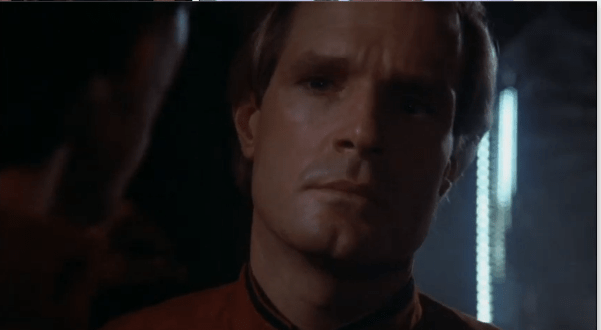
“It’s the rarest, most valuable commodity you can imagine”
Well actually. It’s not. This is one of the biggest criticisms against V (aside from the whackadoodle sparkle-child ending). There are many alternative sources of water the aliens could have used instead of plundering Earth.
But I happen to think the fact that the aliens could extract water from elsewhere but choose to steal from Earth has many historical precedents. I also think this makes for a stronger story because science fiction is better when the motivations of alien races are ineffable.
The Visitors are after all aliens. They are supposed to be different to us, their motivations not entirely transparent or understandable in a human context. This is entirely consistent with what indigenous peoples experienced when they first met their European colonisers. Much of history focuses on “othering” First Nations people, but put aside the Eurocentric gaze for a second. This was a two way street. Consider that European behaviours and actions would have been peculiar or nonsensical to outsiders and you have a strong parallel with V.
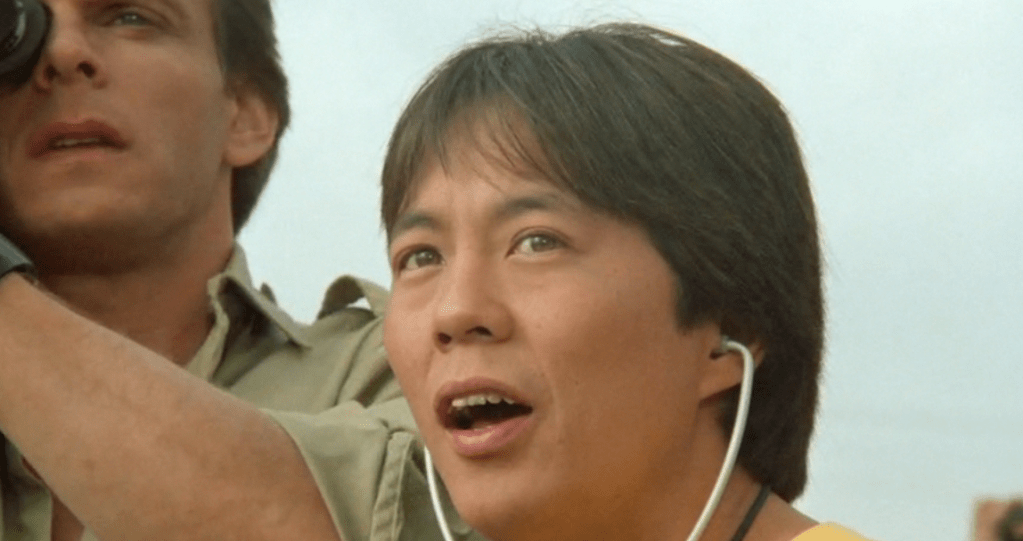
“Mike, how many of them are there?” asks soundman Tony Leonetti.
None of the humans can really appreciate the scale of the alien enterprise here. And again this is entirely in keeping with First Nations’ experience of Europeans. When the first ships of these funny-looking pale skinned people first rocked up, nobody had any sense of how many people there were on the other side of the globe. All clamouring to escape famine, war, poverty and pollution.
Furthermore, one of the better observations in V is that of Caleb Taylor who sees the arrival of the aliens as another event that is going to shunt people like himself further down to the bottom of the heap. It belies the reality that for many the Visitors are just another layer of oppression. Business as usual. Life is a little bit crap for a lot of people even before the totalitarianism even starts.
My point is that the arrival of an outside group challenges the legitimacy of settler societies. A First Nation’s response to a Resistance call to arms to fight the Visitors because they are systematically dismantling our society and threatening our very way of life might well be an ironic: “Oh really, that must be terrible for you.” So Haere mai pākehā” – welcome to the club guys. This is what it’s like to be colonised. Yippee.
Divide and conquer is a really effective weapon used against indigenous people during first contact. This was how Hernán Cortés defeated the Aztecs (well, that and an unhealthy load of pathogens). He chummed up with the nearest disgruntled neighbours who were fed up with paying tribute (i.e. slave trade or human sacrifice depending on who you ask) to bring down Moctezuma at Technochtitlan (now Mexico City).
Even if not by design, settlers also often benefited indirectly from the internecine fault lines within indigenous populations due the the introduction of European technology. In my home country of New Zealand the Musket Wars (between rival Māori tribes) allowed white settlers to make great land grabs in the 1830s, particularly around Tāmaki Makaurau (Auckland) where warlord Hongi Hika made the whole region a no-go zone for anyone who wasn’t affiliated with his tribe.
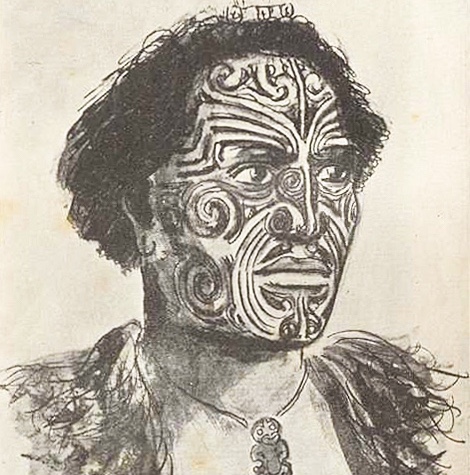
Hongi Hika was the infamous rangatira (chief) of the Ngāpuhi (tribe) who waged war with muskets on their Ngāti Paoa, Ngāti Whātua, and Tainui neighbours.
V does make a point of having Resistance draw from multiple sectors of society and even goes some way to acknowledging there would be different groups of people resisting. When Ham Tyler turns up it’s clear there is another network of people out there. And the script also honours the fact that the Fifth Column has different problems and objectives and remain at arms length until their hand is forced by the red dust. I therefore think V does a good job of showing that resistance is complex and not at all homogenous.
There is a small issue with the analysis above though. These are all settler colonies that I’ve been talking about, whereas in V Earth is a purely extractive colony. It makes less sense to me why the Visitors don’t just take one look at Earth and move in. The weather is nice (well it was in 1983), the females aren’t bad-looking and are relatively compliant, and it’s much less trouble than sucking all the water out of the planet and taking it across the galaxy.
But no for whatever reason (and I have theories about this too) the Visitors want an extraction colony, one where a settler society isn’t established and people are there just to strip mine the place for its resources with little care for the inhabitants. (Except to enslave and eat them.)
Being from the South Pacific the first country that comes to mind when I think about extraction colonies is Nauru which was aggressively mined for phosphate leaving the island completely ravaged. Nauru hasn’t quite been tossed like an empty beer can as Ham Tyler so eloquently puts it, but pretty close. Nauru is now where Australia has its immigration detention centre. Make of that what you will.
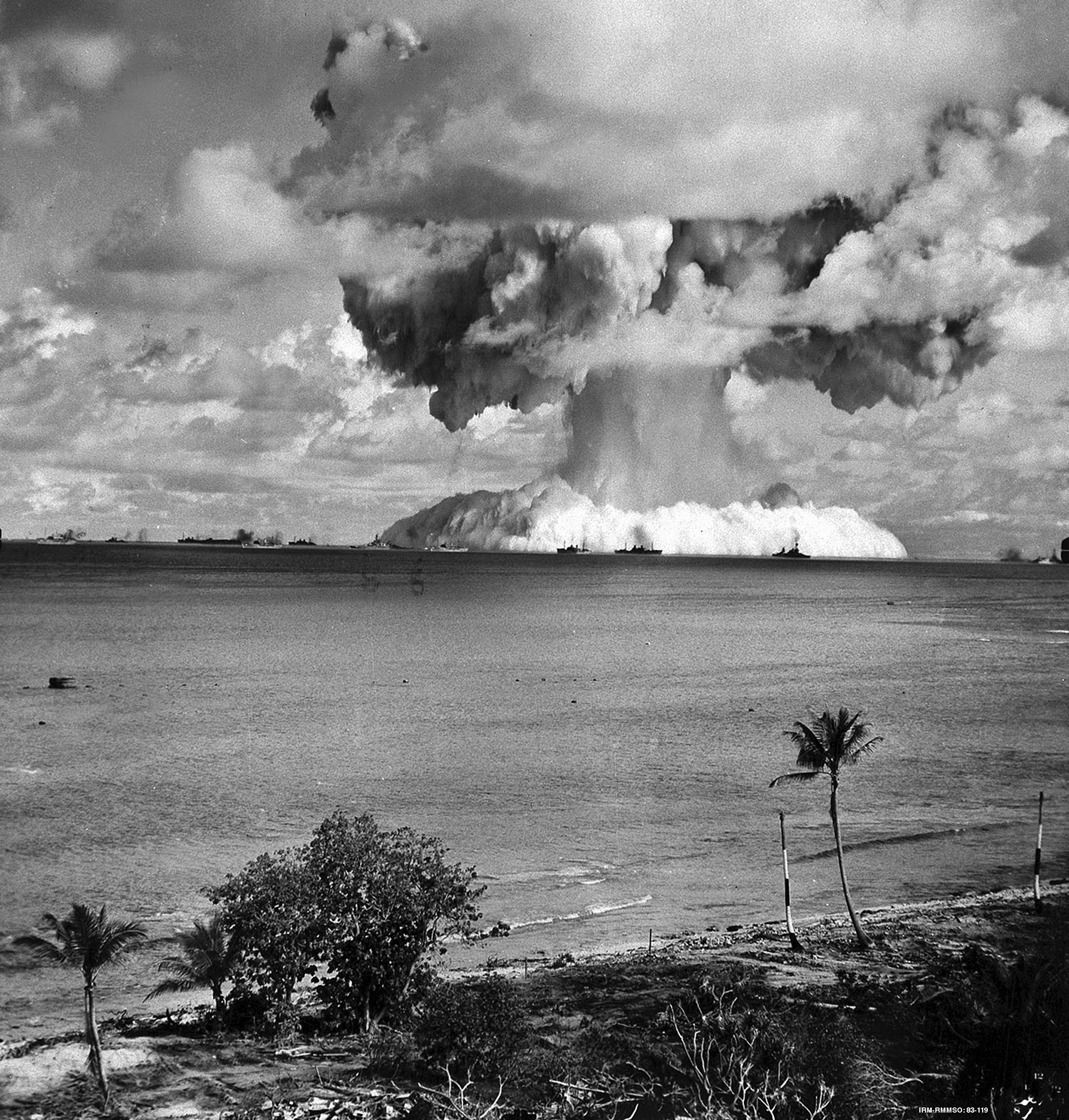
Nuclear testing in the Marshall Islands led to radiation sickness, high rates of cancer, miscarriages and births of “jelly babies” (born without bones and with translucent skin).
In addition Nauru is like other Pacific Island nations which serve as dumping grounds for larger nation’s environmental destruction. Mururoa Atoll and the Marshall Islands both served as nuclear testing sites for France and the US respectively. The French only ceased nuclear testing in the 90s after decades of protest and international embarrassment over the bombing of the Rainbow Warrior. Nuclear testing is a perfect illustration of weird and impenetrable motivations of an alien coloniser to do something utterly perverse and wrong.
These are examples of outposts where colonial forces felt entitled to do whatever they pleased in someone else’s backyard. Damn the environmental consequences. And if you want to talk about medical experiments it’s worth looking into outcomes for the inhabitants of Rongelap who were either neglectfully or purposefully (it honestly doesn’t matter, either way it’s wrong) exposed to nuclear fallout ‘just to see what happens’. (Hint: it wasn’t good.)
Despite the fact there is a precedent, it doesn’t change the fact that the plan to take water from Earth sounds tremendously impractical, and potentially a waste of resource. Again this is consistent with historical events on Earth.
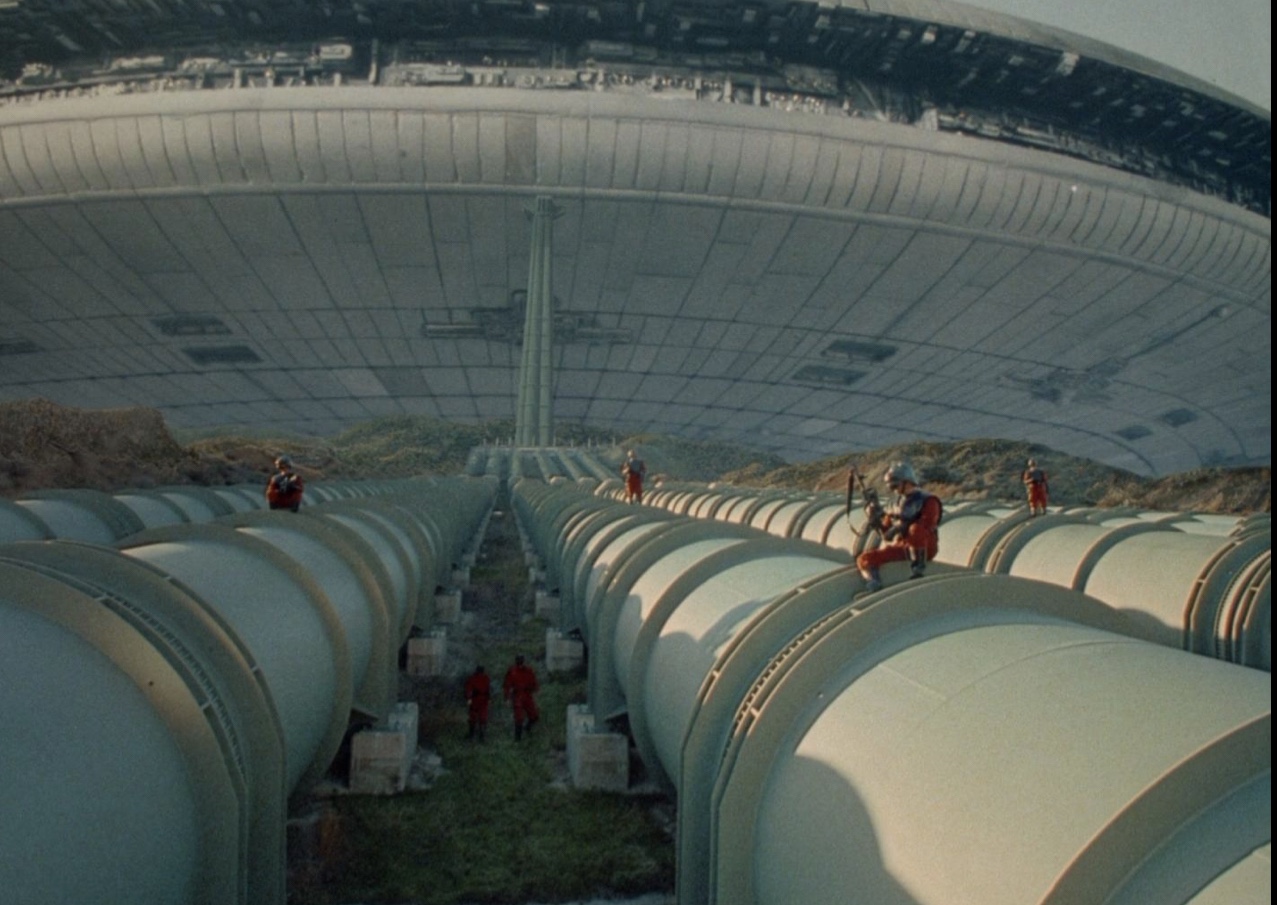
Will you just look at this? This is nuts!
When Martin tells us of the Visitor’s Leader’s plans to extract all the water from Earth to save his planet I’m sure he believes that’s true. (To be fair, aren’t we all guilty of optimistically believing technology, or imminent technology, will get us out of our current environmental crisis?) But I’m less convinced. I would argue even Martin doesn’t understand the full extent of how crazed this is. You the sceptical viewer who scoffed over the improbability of the plot are correct that this plan is bonkers. But it’s entirely historically feasible that someone would do this as it is driven by pure ideology.
Totalitarian regimes come up with these totally dumb ideas all the time and doggedly stick to them despite all evidence that their plan isn’t working. In China The Great Leap Forward was a devastating national plan to accelerate the growth of the economy under Chairman Mau. Industrialisation and collectivisation of farming would supposedly be made possible through the cheap labour from millions of Chinese putting their shoulders to the wheel, attending denunciation meetings and just wishing hard enough. People died in their millions from famine while the propaganda told an amazing story of Chinese can-do power.
This is what happens when ideology and policy is more important than people. If the plan doesn’t work it’s because the people aren’t committed enough and need to be purged (if they haven’t already died as a result of environmental catastrophe). It’s pure zealotry.
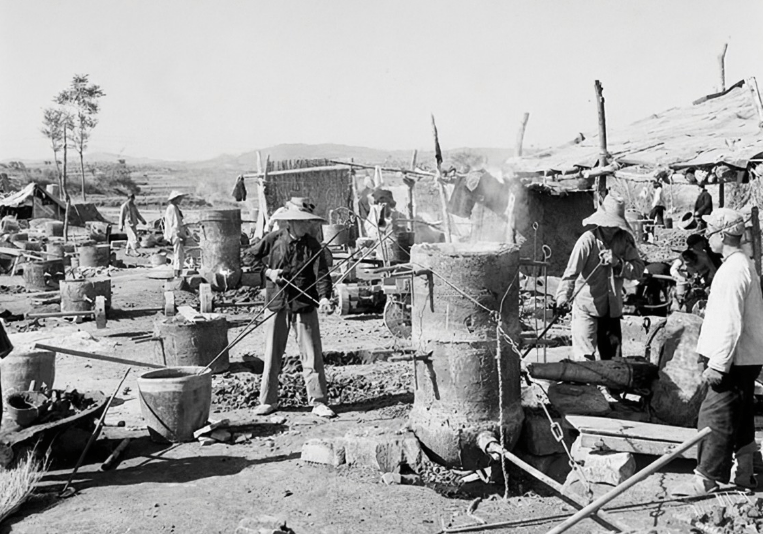
Backyard furnaces for smelting scrap metal was one of the many ill-conceived schemes of China’s Great Leap Forward.
The Great Leap Forward is perhaps the most devastating example of this unhinged devotion to theory over reality but there are countless others: collectivisation of farms in the Soviet Union, Year Zero in Cambodia and it’s inspiration the French Revolution, and even globalisation and global capitalism (which is yet to play out completely as a historical force but early signs are not looking good).
Personally I wouldn’t be surprised if there is a very privileged sector of Visitor society that has hoarded stupid amounts of water on the home planet. My suspicion is that this plan to ship water across the galaxy will also have disastrous consequences for the less well off within Visitor society (the majority of people who we are to understand are more like Willie than anyone else) and that Martin and his contemporaries would be even more disappointed by the actual meagre gains made in this ridiculous gambit. Amorality notwithstanding.
Which brings me to my final point about why I think the Visitors want to steal our water.
Because they can. Might is right!
Over the centuries several colonial powers went to a lot of trouble coming up with justifications for their actions: because it was God’s will, because the natives weren’t Christian, weren’t civilised, were cannibals, were savages, were too stupid or pathetic to look after themselves, or even were fauna. But there is one group of people in history who gave zero fucks for any of this sort of grandstanding. And that was the Romans. Perhaps it was the advent of Christianity that made it harder for subsequent western powers to colonise without conscience. Who knows?
Rome went through several historical phases – all expansionist. First there was the republic, the less famous and glamourous phase of Roman history where the political and social mechanisms upon which Rome relied were established. To massively oversimplify things the foundations of the republic began to get gradually undermined by a series of events including the introduction of violence into the Senate (the murder of the Gracchi), the advent of Marius (setting a precedent for up and coming upstarts to break the rules of democracy) finally descending into total anarchy as various warlords mobilised young unemployed men into private armies (Pompey, Caesar, Sulla) making Rome a barely habitable battleground for years. (Hey doesn’t that sound a bit like Weimar?)
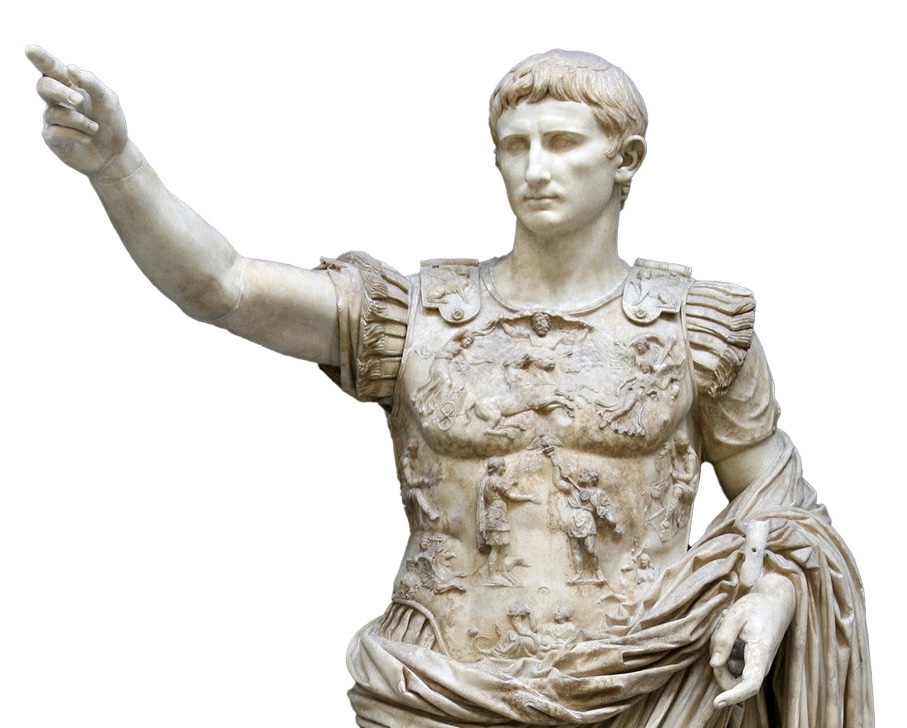
Augustus represents himself in the manner of Alexander the Great, emphasising youth and vision when most Romans preferred to present as old and battle-worn. Despite this image, Augustus was a ruthless propagandist, but he did bring peace to Rome, so there is that.
By the time Augustus came along to ruthlessly crush all competition and bring peace to Rome, people were tired and went along with it. The Roman Empire was born. Following this is the dissolute high Hellenistic period – a slow but gradual decline salaciously captured in The Twelve Caesars by Suetonius (who was a little disgruntled when he wrote this so take it with a grain of salt).
A thread running through both the Republic and the Empire is the concept of imago, appearance, particularly for the powerful families that managed to end up at the top throughout this entire period. For men from these families there was a need to outshine that which had gone before, to do better than one’s father or grandfather. Spare a thought for poor Scipio Aemilianus, grandson of Scipio Africanus who was basically the Alexander the Great of Rome. Actually don’t worry about him too much because he compensated for his comparative lack of military prowess by being a bloodthirsty thug.

Steven was a bit of a bad egg, but maybe it’s not all his fault. Maybe his dad was Scipio Africanus?
The best way a young man could distinguish himself was in battle, which meant that you constantly needed an enemy to fight. In addition, one of the roles of war is to pillage, so many young men of lower status were attracted to the Roman legions by promise of loot.
Now I’m not saying Rome expanded because men needed more chances to distinguish themselves in combat and score loot. But what I am saying is an expansionist mindset was at the core of this militaristic Republic and Empire and I think that is something present in V. Clearly Pamela, Steven, Martin and Jake are all members of a martial class which wasn’t dissimilar to members of the Roman patrician families.

Pamela, Steven and Martin all representatives of a martial class. May as well be wearing togas.
That voracious hunger to conquer is what drove the Romans and I don’t think it’s a stretch to say it could well drive the Visitors as well from what little we know of them. We know they have taken on at least one other group before coming to Earth and that they came out of it badly. So what’s better than taking from others who are weaker than you just because you can?
On that note, I’ve got one more parallel before I draw to a close. Lindisfarne (Holy Island) was a great cultural centre for monastic England. And where there are monasteries in this period there is often cool stuff like precious metals and beer. Little effort was made to build defences for this cool stuff because of the geography of the island. Holy Island is a magical place, a tidal island connected to the coast of Northumberland by a narrow causeway. The whole island is low-lying and is cut off from the mainland twice a day by a fast incoming tide giving the island a sense of containment.
But. On the other side of the island is the North Sea. And in the 8th C AD on the other side of the North Sea are the Vikings.
You know the Vikings…
… so yeah, guess what happened?
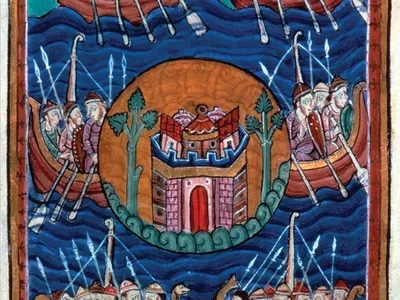
Viking raid on Lindisfarne in 793. The first of a series of Viking raids which lead to the Danelaw in Britain.
Earth is like Lindisfarne. Beautiful. Bountiful. Vulnerable. Like an egg without a shell. Newly introduced to an alien race that may well be part of a broader intergalactic community, our planet is relatively defenseless. It’s easy pickings to a group with superior technology, might and a lack of compunction. Martin tells us his lot have been defeated before by another force so we know others are out there. Maybe of these others Earth was the weakest (or at least that’s what the Visitors thought before we wheeled out our sparkle-child) and therefore the easiest target.
That water will taste so much the sweeter for the fact it was taken from someone else.
So there you have it, just some of the historical connections for V. The thing with history though is you could write a dissertation on just about any topics I’ve raised here. I’ve barely scratched the surface. My summaries of Nazi Germany, Ancient Rome and monastic England are so shockingly glancing I’m beginning to forgive Kenneth Johnson for writing that line – you know the one:
“Circumstances, promises”
(Thank god Mike Donovan asked that question of Martin and not me otherwise he would still be holed up on the mothership dying of old age by now.)
In the next post we will examine the historical figures who inspired the characters in V. There’s so much ground to cover and not just because I’m a windbag, there are many beautifully drawn characters to consider. This may need to be split into several posts. Let’s see how we go.
 When Martin Died