
When V first aired in the 1980s, to some audiences that idea of the alien forces targeting scientists for persecution seemed faintly ridiculous. In a previous post I lampshaded the heck out of the “here to take the water” plot line. But for the scientific conspiracy plot: no need. We’re here already. We are on the verge of living in a The Congress-like dream world where avatars and online discourse are the only truth we need. All we have to do is change the narrative and that will change reality. Who needs science? Who needs history? Who needs facts? They’re antiquated inconveniences so lets be done with them! Hurrah!
Now that I have that out of my system, let’s move onto historical precedents for our scientists. It would do us well to remember that V was written just after the Cambodian genocide (1975-79). In Cambodia the Khmer Rouge were rabidly anti-intellectual and distrusted anyone associated with the intelligentsia or the middle class in general. People who appeared to be “intellectual” because they had an education, or even because they wore glasses were often arrested and quietly done away with. Thirty years later when tourists first started going back to Cambodia, many reported a reticence among Cambodians to appear as anything other than humble or even simple, highlighting just how terrifying this time period must have been.
To me it therefore makes sense that the aliens go after the scientists. They do of course pose an intellectual threat, but they are also international, present in most cultures on earth giving the Visitors an excuse to round people up across the entire globe.
Arch Quinton (played by Myron Healey)

Arch Quinton is an early casualty of the Visitor war on science.
Quinton is introduced to us as a brilliant paleoanthropologist who is essentially a Louis Leakey type. Leakey and his wife Mary Leakey were responsible for helping move focus of the story of evolution from Europe (where people were still fruitlessly looking for the “missing link”) to Africa. This was largely through their work in the Olduvai Gorge in East Africa where they both had remarkable careers. For many years the “out of Africa” theory of evolution was dominant largely because of the precedent they established in the African East Rift Valley. Fossils discovered in South East Asia have now forced anthropologists to take a more nuanced view of evolution.
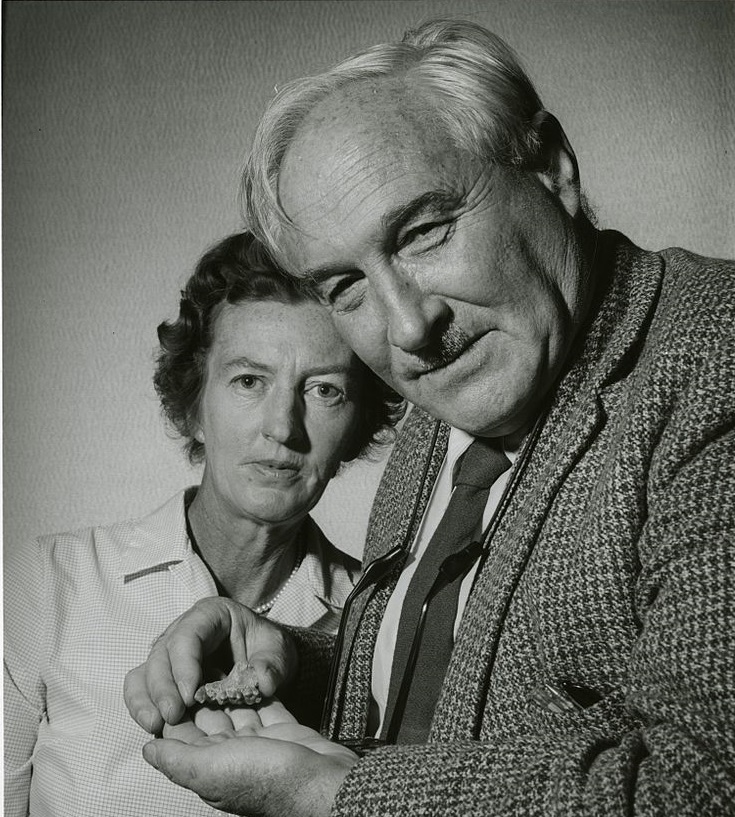
Louis and Mary Leakey changed the way we thought about evolution and Africa
One of the most arresting opening shots in V is that of a hominid skull which is being excavated with the alien mothership in the background. Quinton is joined by his colleague Robert Maxwell as they admire the fossil together.
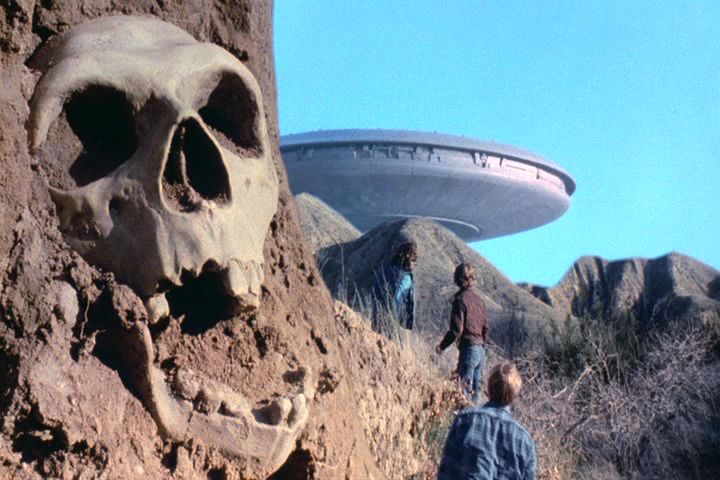
Old meets new in one of the most striking shots in the mini-series.
Oh, go on then. Let’s talk about the character inspiration for the fossil too! We have to rely on the dialogue somewhat as it’s a little hard to tell much about it because of how little of the skull is visible. This fossil is most likely an Homo erectus, as Robert says the fossil is from the late Pleistocene. I think the fossil is based on KNM ER3733 (catchy name huh?) I think this because there aren’t that many H. erectus fossils around and it’s easy to narrow down to a few options that were discovered pre-1983. Of the specimens from that time this fossil looks pretty close in terms of completeness to KNM ER3733. Plus Quinton refers to the fossil as a lady and KNM ER3733 is widely thought to be female because the skull is more gracile (although it’s been recently acknowledged this could just be a more gracile male as well).
KNM ER3733 was discovered by Richard Leakey, son of Louis, in 1975 and may have made the news in the late 1970s (You can actually hear in the background dialogue of V someone saying “Richard what is that” when they first see the mothership). I therefore don’t think it’s an unreasonable assumption that a prop designer may have based our fossil on this recent discovery.

KNM ER3733: One million years from now you too could be the inspiration for a science fiction TV prop
The character of Arch Quinton is the canary in the coalmine, meaning it is his disappearance that is the first indication that not all is as it seems with our new friends the Visitors. I think V does this very well as this is exactly what happened in Nazi Germany. It was the very quiet and gradual disappearances that are the most chilling. More so than the upsetting public stitch up job they did on Julie’s professor Doctor Metz. This is exactly what happened to the Nazi’s political opponents, journalists, and any others that wouldn’t play along. Then came the news that the nice Jewish family down the hall was gone. They might have run away, or they might have been taken. Sadly we know Quinton’s fate and it is not good.
Robert Maxwell (played by Michael Durrell)

Robert Maxwell is having the worst day of his entire life right now. Well maybe until tomorrow.
Watching Robert Maxwell’s life fall apart is like watching a slow motion train wreck. At the outset he’s doing very well for himself, he has a stable academic position which pays enough for a very comfortable life in Southern California with his lovely wife and children. He clearly gets to travel, presumably to Africa (see above) for his work, and is excited and fulfilled by his job. By the end of the original mini-series this life has utterly collapsed. The job is gone, the house gone, the beautiful wife is dead and he’s left to bring up three daughters (who now more than ever need a mother) in what is effectively a violent and unstable hellhole. He’s yet to find out what horror has been inflicted upon his oldest daughter Robin, which in turn rains yet more tragedy upon the Maxwells. It’s fair to say Robert goes through a lot of crap.
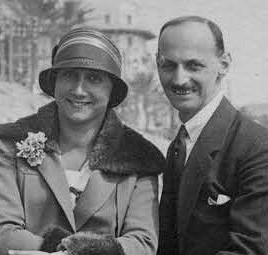
Edith and Otto Frank in happier times, on their honeymoon in San Remo
While Otto Frank is not literally the inspiration for Robert Maxwell, it is clear stories like his inspired the character. Like Robert, Otto Frank father of famous diarist Anne, went through tremendous loss during the Nazi period. The Frank family was originally German, they fled Germany for Amsterdam in the early 1930s. But when the Germans invaded The Netherlands the Franks found themselves subject to the very racial laws they had previously tried to escape. Otto Frank had to sign his business Opekta over to a gentile friend. When the Franks went into hiding they lost their home. And when they were finally captured and deported, Otto Frank lost his wife and both daughters. Otto Frank is just one example of what millions went through in this time period. It is his connection with his daughter’s diary that humanises this tragedy which is otherwise impossible to grasp due to its colossal scale.
I think there is also a literary influence for Robert in the form of the William Styron novel Sophie’s Choice which was adapted for film with Meryl Streep in 1982. The eponymous choice that Sophie is forced to make is between her own children. This cruel version of Solomon’s choice is inflicted upon Sophie by a doctor on the railhead ramp during Selektions (remember we discussed this in part three of this series). Styron gained the inspiration for this plot from stories he gathered from Romany Holocaust survivors he met while living in Brooklyn.
Robert is also forced by Captain Jake to choose between Robin who is in immediate danger while held on the mothership and his wife Kathleen and daughters Polly and Katy in the Resistance mountain camp. False promises are made, promises that you can see Robert rationalising because he so desperately wants to believe them. Jake promises that the mountain camp may be taken without anyone being hurt, even saying his troops will not attack until an agreed time.
Totalitarian regimes use these methods all the time of course, individuals may be willing to take risks for themselves, even die if they have to. But threaten someone else, particularly a loved one and it’s game over.
Robin Maxwell (played by Blair Tefkin)
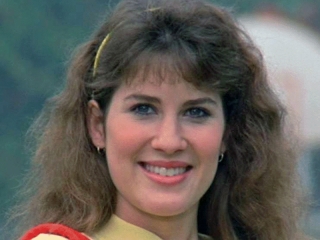
Robin Maxwell was originally written quite differently as an Anne Frank type, but for various reasons things went in a different direction.
An earlier version of V was actually told more from Robin Maxwell’s perspective, with Robin having much more in common with Anne Frank. Anne Frank was a fiercely intelligent and talented young girl who lived in hiding in Amsterdam from 1942 to 1944 during World War II. Having kept a diary for two years, in 1944 Anne began to express interest in becoming a writer and began to edit and rewrite her own diary with a view to seeing it one day reaching an audience.
Like Robin, Anne was given to frustration and petulance due in part to her temperament and in part also to her young age and difficult living circumstances. But by 1944 Anne was showing growing maturity and it’s clear that had she survived she would have had a good chance of fulfilling her ambition of becoming a journalist.
I want to be useful or bring enjoyment to all people, even those I’ve never met. I want to go on living even after my death! And that’s why I’m so grateful to God for having given me this gift, which I can use to develop myself and to express all that’s inside me!
The Diary of a Young Girl
Anne Frank is now one of the most famous diarists in history, taking her place next to the likes of Samuel Pepys and John Evelyn. Her diary has been translated into over 70 languages, and is a set text for schools in many different territories.
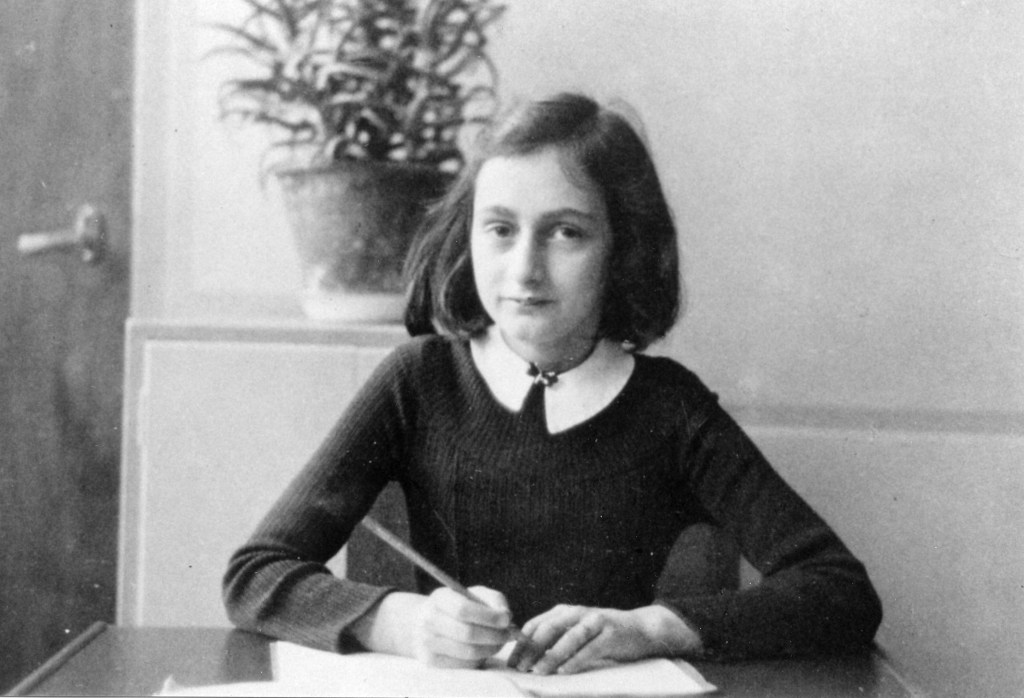
Anne Frank had ambitions to be a writer and is now one of history’s most famous diarists.
So, no disrespect, but, this ambitious, insightful young girl is really nothing like our Robin Maxwell. What happened?
I believe this plan to centre the plot around an Anne Frank type had to change for a couple of reasons. Firstly there was an unexpected change in casting after the unfortunate passing of Dominique Dunne who had a different approach and energy for the role. Dunne apparently played Robin as much more sensitive, and with a little more innocence.
I think it must have been difficult for Blair Tefkin to step into the role given the circumstances. Tefkin played Robin more as a Valley Girl, perhaps informed by her recent work on Fast Times at Ridgemont High (where Tefkin played one of the Pat Benatars.) Fast Times was a commentary on the falseness of Californian teenage bravado regarding sex and money – particularly for the female lead played by a heart-breaking Jennifer Jason Leigh. I therefore think this choice made by Tefkin makes a lot of sense and makes things more contemporary.
The other thing that may have happened here is that Kenneth Johnson may have appreciated the limitations of a narrative told from a teenage girl’s perspective. Johnson needed someone who was hungry enough for the truth to seek out and see things with their own eyes. Robin Maxwell would never have had access to that, and if she had it was a fate she would not have realistically come back from. It’s only natural that the narrative therefore begins to centre more around the Mike Donovan character.
The one thing I do think that V does capture well through the character of Robin is the body horror involved in pregnancy, particularly pregnancy during genocide. The horror of being pregnant at all in this environment is an appalling thought. I think that foreboding with the coming of whatever Robin’s baby is going to be is perfectly captured.
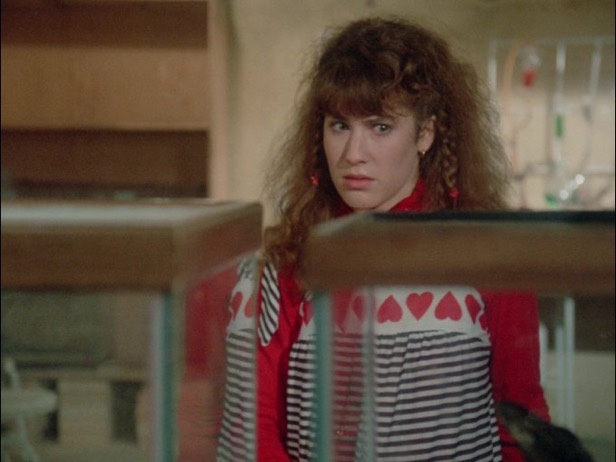
Pregnancy is difficult enough under any circumstances let alone what Robin Maxwell must endure.
Pregnancy alone, especially for a young girl like Robin, is probably scary enough without the additional horror of discovering too late that the baby is an actual monster. For women in concentration camps pregnancy was an instant death sentence. Some women managed to conceal pregnancies for a long time in the camps before they were caught. Others sought abortions under what must have been the most horrendous circumstances. One can only imagine with each passing week as the baby bump grows larger and the prospect of birth gets closer, the sense of tremendous dread these women must have felt. In The Final Battle Blair Tefkin really nails that weird mix of complete denial and utter hysteria Robin is feeling perfectly.
Polly Maxwell (played by Viveka Davis)

“Looks like a boy to me”
Polly is not impressed with Brian’s 1000 megawatt smile.
I think Polly Maxwell deserves an honourable mention here because she is clearly the future of the Resistance. Her temperament is so different to her older sister Robin’s. Robin is living in something of a dream world, caught up in the romance of the designed-to-be-desired Youth Leader Brian
Polly is a scrapper, too young to understand you can’t resolve every problem with your fists. Of the two sisters Polly clearly has the mettle for whatever comes next. Polly reflects the reality of war for many young and pre-teens during WWII. Girls and boys in their early teens were forced to grow up very quickly.
Consider Arek Hersh who at only 14 years of age quickly realised the purpose of the Selektion at Auschwitz and switched over to the men’s queue where he lied about his age to avoid the gas chamber. He managed to survive in the men’s camp for two years. This was extraordinary as most children did not even make it in to the camp, let alone survive this long.
Or think about Mira Papo, the young woman mentioned earlier who was hidden by the Kokrut family. Before going into hiding Papo was a partisan, fighting with other youths her age in the forests of Yugoslavia. Mira Papo had been a member of the Hashomer Hatzair, a Zionist movement in Eastern Europe which fostered an ethos of self-sacrifice and serious-mindedness. In Yugoslavia it was an almost natural evolution toward partisanship for different youth groups, especially after the call to action for all Yugoslavs of all ethnicities, religions and political persuasions by Josip Tito.
Also in Yugoslavia, Lepa Radič was a Communist partisan fighter who organised ambulances for her compatriots in the Battle of the Neretva, and was involved in bloody battles with the brutal SS Mountain Division. Radič was publicly executed at just 17 years old. When her executors offered to spare her life if she dobbed in her compatriots she said:
“I am not a traitor of my people. Those whom you are asking about will reveal themselves when they have succeeded in wiping out all you evildoers, to the last man.”
Lepa Radič
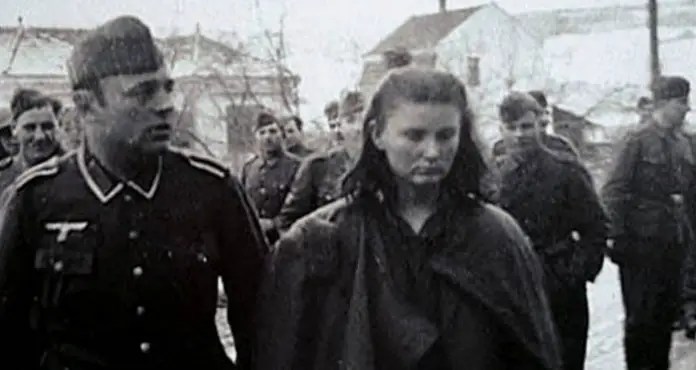
17 year old Leda Radič was the youngest female partisan to be executed by the Nazis. Many partisans in occupied territories were teenagers.
I look at Radič and Papo and cannot help thinking if left to her own devices Polly would not go quietly either.
 When Martin Died