
In the last four posts I’ve looked at how V was informed by history, particularly Nazi Germany and World War II. Next is a series of posts looking at the kinds of historical figures who inspired some of the characters of V. In some cases there are people who have been clearly identified as direct inspiration. In other cases I have identified some exemplars of the type of people Kenneth Johnson clearly had in mind when he was writing V.
One of the great things about V is that is draws together a huge cast of characters who represent so many different aspects of human society. Each character is so beautifully written and carefully thought out, and the cast is strong without exception. Because many characters are exemplars of a type and because there just isn’t enough space, I am very sorry that I cannot possibly talk about every single person. Instead, like Johnson I will dedicate these following posts to those who went before us.
In this first post I will concentrate on those who chose to help their friends, relatives and neighbours when they were subject to oppression. There is some crossover here as helping is defined as a form of resistance and many helpers become full blown Resistance fighters later on but I chose to focus on these two groups separately. I did this partly because helping in and of itself is a distinct thing but also because the Resistance is a big enough topic for a post of it’s own.
Abraham Bernstein (played by Leonardo Cimino)
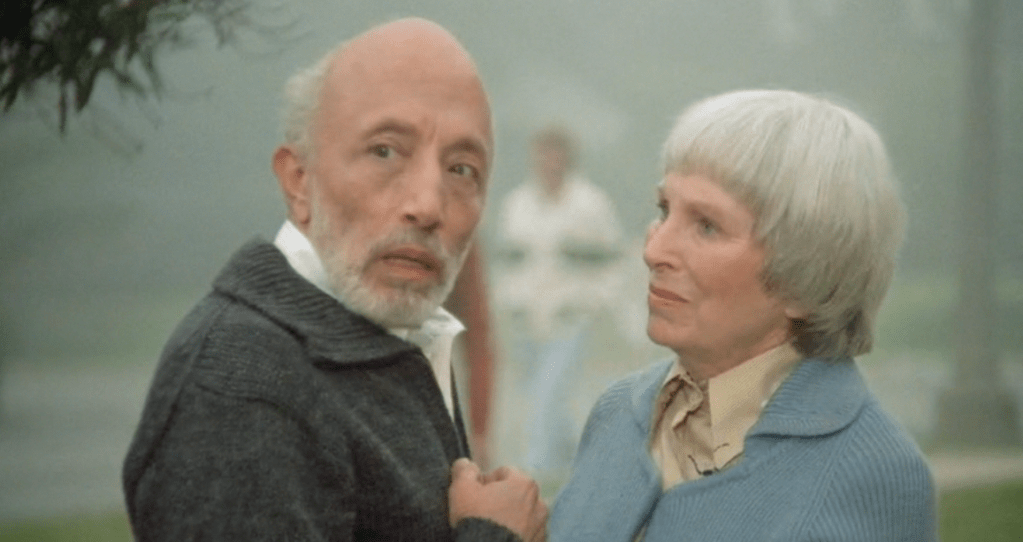
Abraham Bernstein (Leonardo Cimino) with Ruby Engels (Camila Ashland)
I have to start this character series with Abraham Bernstein because he is the heart and soul of the original mini-series. And also because he is the character that carries history into the show.
The character of Abraham Bernstein was a participant in the historical events that influenced V and is the Cassandra of the piece. Cassandra was the daughter of Trojan King Priam. She was blessed with the gift of prophecy but cursed to have no one believe her. She correctly predicted the fall of Troy well before Paris kicks everything off by kidnapping Helen.
So it goes that Abraham immediately recognises the signs of totalitarianism well before anyone else, because he’s lived it before. Everyone dismisses his fears as the post-traumatic paranoia of an old man. In fact at the very beginning when the Visitors first arrive and it’s all action figures and lightbulb jokes it does seem that he is being a bit of a pill. But he’s been through a lot, so it’s natural for him to be extremely wary of our new alien “friends”.
Abraham carries many lessons from the past into the present. He recognises the early signs and he understands persecution. Having experienced it himself he decides the right thing to do it is to offer help.
There are numerous real people that Abraham Bernstein could be based on. There was the group of people who helped Anne Frank and her family as just one example. But the example Abraham most reminds me of is Derviš Kokrut, a librarian from Sarajevo.
Kokrut was a scholarly man who had studied in Istanbul and the Sorbonne. He first fell foul of a fascist group known as the Young Muslims who sought him out as a prominent Muslim in what was pre-occupation Yugoslavia at the time. Later when the Nazi’s invaded and required him to hand over all the Jewish books in the library, Kokrut refused, smuggling out the most precious of these – the Sarajevo Haggadah.
Kokrut also took on a young Jewish partisan woman by the name of Mira Papo, passing her off as his daughter’s Muslim nanny for several years during the war. Then after the war he was convicted as an enemy of the then communist state. After a period of incarceration he finally fled his homeland for Paris where he spent the last of his years.

Derviš Kokrut was a Bosnian Muslim scholar, famous for rescuing the Sarajevo Haggadah from destruction, but also sheltering a young Jewish woman named Mira Papo during Nazi occupation of Yugoslavia (as the area was then known).
Of course Kenneth Johnson is very unlikely to have had Kokrut specifically in mind when he wrote the character of Abraham. But there is something in Kokrut’s character and life story that very much reminds me of Abraham. And it’s not because he is dapper and shares the same build and delicate facial features (although this is a factor). Kokrut never just rubbed along with whoever was in charge. He was quick to observe and quick to learn and he resisted injustice at every turn. No matter where it came from. No matter how many second or even third acts there were in his life. Abraham was always going to be that person, right from the get go.
Most importantly Abraham gives us the title of the show and the reason for the title. It is his legacy. Every time you see a spray painted V, think of Abraham!
V for Victory! You understand?
Go tell your friends!
From V the original mini-series
Stanley Bernstein (played by George Morfogen)
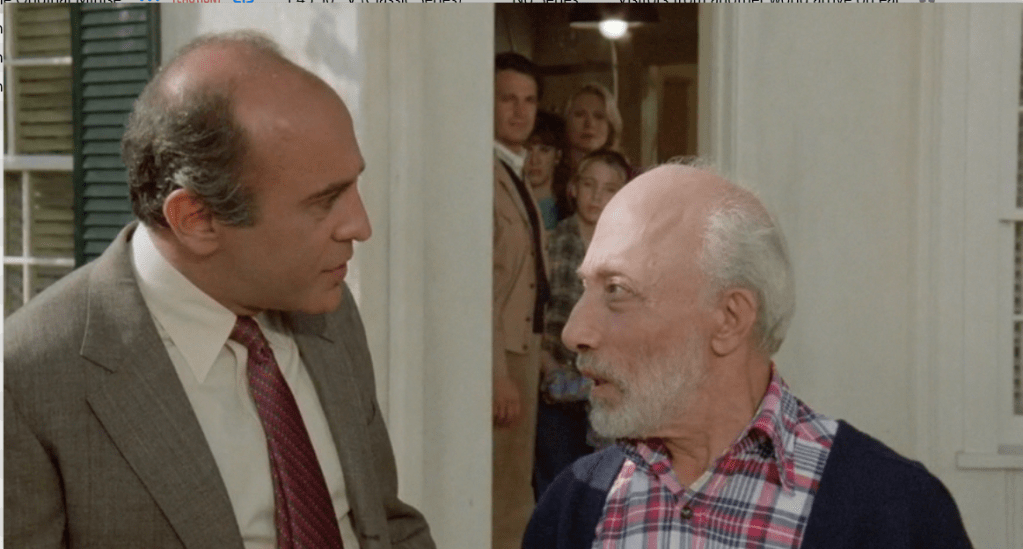
Stanley Bernstein is less than impressed that Abraham is hiding scientists in his pool house.
Abraham is the oldest of three generations of Bernstein living in the same household. Each has completely different attitudes to the Visitors. Abraham’s son Stanley Bernstein is the everyman of the mini-series.
Podcaster Shag Matthews has recently dedicated a series of episodes of the superlative Once Upon a Geek to V and in the first of these episodes Matthews highlights the fact that Stanley represents how many of us would react to a totalitarian take-over. Stanley hopes for the best and thinks that if we wait things will surely pass.
I have to agree with Matthews. Over the past few years I’ve found myself trying to soothe my more reactive partner by saying things like “it will all blow over soon” or “it can’t last” or even “it doesn’t concern us, we’ll be fine.” Whether it be Brexit or the pandemic or even the cost of living crisis I’ve hand waved away concerns in private conversations at home while keeping my own misgivings to myself for the sake of keeping the peace. I realise perhaps I have compromised and overlooked things I shouldn’t have. So if I’m honest Stanley is the character I am most like as well. Matthews is so damned right. It’s a slightly sobering realisation.
But Stanley’s attitude changes over time as he begins to tire of the restrictions which are supposed to protect him. In the middle piece of the original mini series he is the most outspoken of the Bernsteins. And it is his wife Lynn who is the one who has to inform him he can no longer speak freely in his own home.
Stanley is not exactly thrilled when Abraham offers a hiding place for the Maxwell family. Robert Maxwell is a scientist and therefore a target for persecution by the Visitors. Abraham manages to convince his son to help the Maxwells by telling him some unpleasant truths about the death of Stanley’s mother in one of V’s most heart breaking scenes.
What I like about V the original mini-series is that is gives the characters space to grow and change their minds. Stanley Bernstein is the perfect example of this. Kenneth Johnson doesn’t require his characters to be perfect or to always make the right decisions straight off the block. It is this that makes their bravery much more compelling.
Lynn Bernstein (played by Bonnie Bartlett)
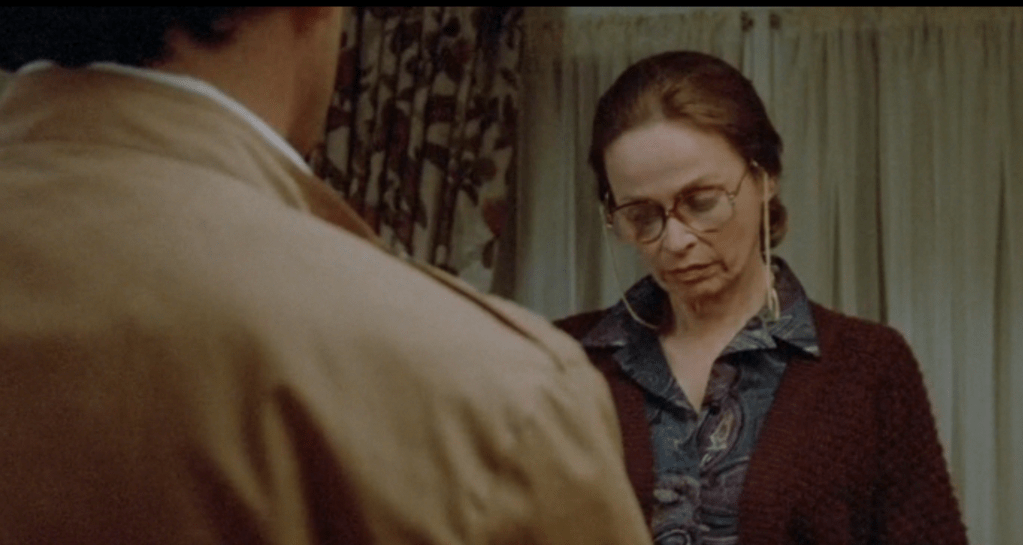
Lynn Bernstein reads a letter from father-in-law Abraham who says he is willing to take the risk to make a stand.
Stanley’s wife Lynn Bernstein is brittle and jumpy from the beginning of the show. She is on the edge of terror when the aliens first arrive. But slowly a peculiarly feminine steeliness arises in the character. Lynn is quick to see the power the romance of the Visitors holds over their son Daniel. It is Lynn that is pragmatic about Daniel as she warns Stanley to be careful what he says. She recognises that the situation has changed and is probably more realistic about it not being temporary. (You can see Stanley clinging to this belief when he says he wants things back the way they were.)
But it is Lynn who is reluctant to get involved after she and Stanley are taken prisoner on the mothership. And it is Stanley who says they must help the Resistance (helped by the voice of Abraham from the grave). And so they do.
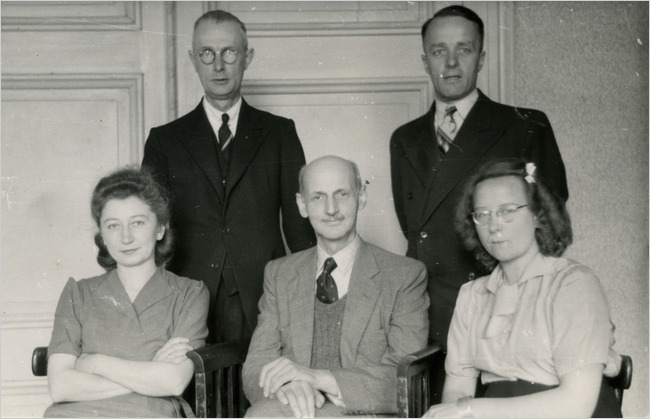
Otto Frank (centre) with some of those who helped Johannes Kleiman (top left), Victor Kugler (top right), Miep Gies (bottom left) and Bep Voskuijl (bottom right)
Speaking of feminine steeliness, Miep Gies who helped hide the Frank family in Amsterdam is the perfect example of this. The decision to help others was less of an evolution for Gies than for Lynn Bernstein. Gies was one of the people who helped Anne Frank and wrote in her memoir 40 years later :
“I am not a hero, I stand at the end of the long, long line of good Dutch people who did what I did and more — much more — during those dark and terrible times years ago, but always like yesterday in the heart of those of us who bear witness.”
Anne Frank Remembered by Jon Blair with Miep Gies
Stanley and Lynn Bernstein represent the quiet bravery required to take risks, to provide sanctuary and cover, to collect extra rations, and to in so many small ways keep up the spirits of those living in hiding. Miep Gies (among others) features regularly in this role in Frank’s diary but I am certain there were many other pragmatic and phlegmatic women and men just like her.
Ken Johnson most certainly had those who helped Anne Frank in mind when he wrote the script for the Bernsteins and the companion storyline for the Maxwells.
Sancho Gomez (played by Rafael Campos)

Sancho Gomez helps smuggle the Maxwells to the Resistance mountain camp.
I really think the character of Sancho Gomez is vastly under-appreciated, particularly in the original mini-series. Sancho is one of the first people to offer the Maxwell family his help, and he is extremely brave under pressure. He does not bow to the brutality of the Visitors, nor kowtow or tug forelocks. He emerges from his time in captivity with incredible dignity.
At first glance it is very easy to underestimate Sancho, in fact Johnson is relying on the fact we will see him as just another one of the hundreds of workers from Mexico who keep the households of California fed, cleaned and landscaped. It is common for us to be completely ignorant about the backgrounds of immigrants to our nations. Even when they come from right next door. But on the mothership he tells Donovan that his grandfather fought with Emiliano Zapata who led the Mexican Revolution in 1910. This familial background inspires Sancho to not buckle when tortured by the Visitors.
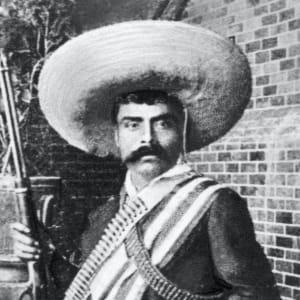
Emiliano Zapata was a Mexican agrarian reformer, who was assassinated in 1919. Following his death Zapata became a martyr. He is an inspiration to many Mexicans lauded for his willingness to fight for the improvement of quality of life for all.
Sancho is a pivotal character in the original V mini-series. It’s the courage of this seemingly humble character that inspires Martin to stay on the mothership and act as a mole for the Resistance. This means Sancho is indirectly responsible for the establishment of the Fifth Column on Earth!
Sancho helps the Maxwell family escape to the mountains in a modern day version of the Underground Railroad. He clearly has experience with smuggling people. Smuggling people across borders and through checkpoints was one of the ways many people helped their Jewish compatriots evade capture, just as Sancho did with the Maxwells. There is one significant and coordinated effort which is a parallel to this, and that is Denmark.

Børge Laursen and Jacob Andersen made ten trips ferrying people across to neutral Sweden under their herring nets in 1943
Over 99% of the Danish Jewish population evaded capture and survived the war due to the actions of thousands of ordinary Danes who helped them gain safe passage to Sweden which was neutral. This was done via a flotilla of small privately owned boats in Denmark’s equivalent of Dunkirk. This is an incredible achievement when you consider how successful the Nazis were at forcing other nations to hand over their Jewish populations.
At first when they were occupied by the Germans in WWII, the Danish had an attitude of “cooperation”. It’s a little hard to explain the Danish mindset here, it’s the same mindset that gives us Lego which is from “leg godt” meaning play well. This ethos informs the Danish way of life to this very day. The Danes didn’t completely capitulate, it was more like an application of game theory. How do we use collaboration to get what we want? And at first it was effective. The Germans left the Danes to their own devices until 1943, meaning Denmark was a relatively independent and democratic anomaly within the broader Reich. All because the Danes presented with an attitude of cooperation. This meant that the Danes were in a position to refuse the Germans on many issues. Somewhat different in temperament to Sancho who spat in his oppressors faces, but still incredibly brave.
Needless to say things soured quickly between the Germans and the Danes once the Nazis realised how empty Danish cooperation actually was, and began to notice how much leeway they had conceded to the Danes who weren’t into capital punishment for petty crimes, or genocide. By the end of the occupation the Nazis declared that the Danes were literally the worst people ever. Which I believe is a badge of honour. Go Denmark.
Officer Randy Talbot (played by Michael Bond)
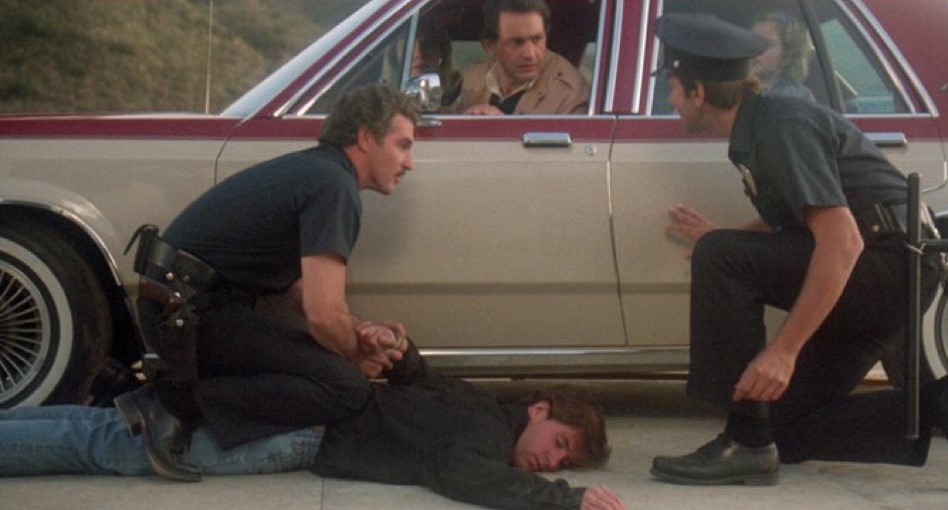
Officer Talbot (right) isn’t quite as welcoming of the new evil reptilian alien overlords as his colleague Bob Briggs (left)
Not all forms of help are so obvious. The kind police officer, who according to the V Fandom website is called Randy Talbot, is an example of someone who helped people by looking the other way. Randy does this twice in V, firstly when Sancho is trying to smuggle the Maxwell family up to the mountain camp and secondly when he realises Ruby is responsible for setting a Visitor shuttle on fire but says nothing.
This form of help is so difficult to pinpoint historically with any confidence because there were so many people who outwardly looked as if they were going along with everything while helping in very quiet and subtle ways like our friend Randy. After the war many could therefore claim that they were helpers (Albert Speer is one of these – full rant about him when we talk about German resistance to Nazism later) even if they did absolutely nothing material to help their fellow humans. Ironically Derviš Kokrut who did so much to help others was accused of collaborating with the Nazis after the war and struggled to prove that he was innocent, which shows that we live in an unjust world.
Small acts of resistance are very hard to find in the historical record but I did find a parallel in a contemporaneous work as described in the following song about actor Claude Rains:
Claude Rains, in Casablanca
He was the French Police Inspector
A functionary through and through
Remember at the end out on the airstrip
He could have tried to stop them
Ingrid Bergman and her friend from the French Resistance
But he pretended not to see
It was a small act of defiance
As the storm broke in the distance
He was on their side after all
Claude Rains by The Mutton Birds
Ah yes. The film that gives us the title of the other film. (“collect the usual suspects”) Casablanca has the character Captain Renault played by Claude Rains go through the motions of capitulating to Nazi Major Strasser and it is only at the very end of the film that the audience learns where his allegiance lies. (The ending is so famous this shouldn’t be a spoiler for anyone!) This leads to Renault and hero Rick wandering off into the fog with the movie ending on that other famous quote, you know the one. I think Johnson might be referencing it here:

“I think this is the beginning of a beautiful friendship.”
I think Randy’s small act in pretending not to hear Katie crying is just as dangerous for him as if he had taken more direct action. If his partner Bob ever figured out what he’d done I’m not sure he would have covered for him at all. I am just a little bit sad that Randy has to spend so much time with Bob (who seems pretty toxic) and doesn’t have a friend to wander off into the fog with.
I really do hope there is someone or something out there that sees and smiles upon the Randys of the world.
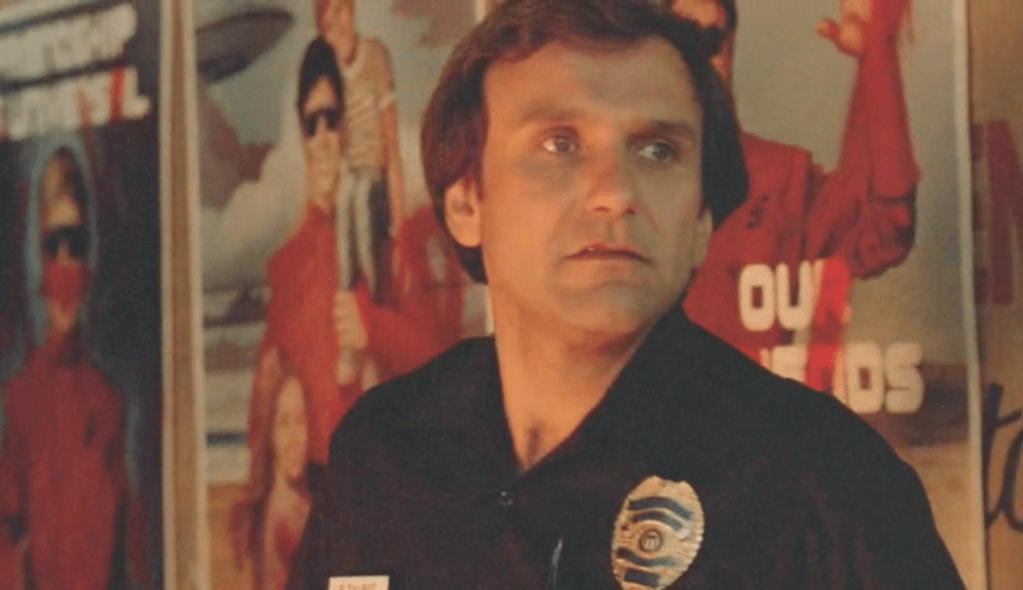
We see you Randy Talbot
 When Martin Died