
It’s the final countdown!
(Fun fact! Germans invented the word “ear worm” (Ohrwurm) because German is a very precise language and they have nouns for everything.)
Yes, this is the final instalment of my series on V and history. We made it!
You may remember in my very first post we went for a little jaunt to Berlin where we looked at Napoleon’s hat. Well… “There’s something else I have to show you.”
Let’s go for a little walk around Berlin shall we?




We’ll start our walk outside the Reichstag where stands the Memorial to the Murdered Members of the Reichstag. It is made up of a series of 96 plates, each dedicated to a different parliamentarian who was murdered by the Nazis. Just across the road in the Tiergarten is a collection of memorials to murdered Roma and Sinti, homosexuals and also those euthanised during Aktion T4. Continue up Eberstraße and you will pass the Memorial for the murdered Jews We’re not stopping by for any of these, we’re just passing through on our way to the Johann-Georg (Georg) Elser memorial on Wilhelmstraße.
Georg Elser was a communist who led a plot to kill Hitler and a group of high-ranking Nazis with a bomb in 1939. Bad timing meant the bomb did not strike the group when all were present. After this attempt failed Elser was captured, interrogated and killed. Let’s continue shall we, past the Topography of Terror which is where the Gestapo headquarters used to stand, now dedicated to documenting the atrocities of the Nazi era. We’ll cross over Potsdammer Platz to the Monument to the German Resistance on Stauffenbergstraße. (Yes that von Stauffenberg). If you’re willing to go further afield you can head out to Volkspark where there is the Memorial to Polish Soldiers and German Anti-Nazis. Look you get the idea. It’s impossible to walk around Berlin without tripping over another Denkmal to the fallen resistors to Nazi oppression. Literally, I have almost tripped over the Memorial outside the Reichstag. Not that it isn’t a worthy dedication but the design is bloody inconvenient.
My point is, that this guy:
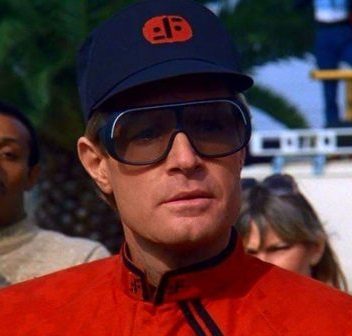
What a total buzzkill standing around looking all pensive and dour.
should not even exist by the time we meet him in V. The difficulty is that there are very few people with the same kinds of convictions around by the time Germany has entered a state of total war in 1939-1940. I’d say this is roughly equivalent to where our aliens are at in their story by the end of the first episode in V.
The problem with placing the Fifth Column within the context of German resistance to the Nazis is one of “who”, “when” and “how”. German resistance was disparate, disorganised and proportionally very small. The reasons for this are varied and complicated. But we’re here to learn and understand (I hope) so deep breath, here we go.
Firstly, the Nazis were really really popular. Very few people saw any problems with the Nazi government, certainly during the 1930s and early 1940s when for average Germans (who weren’t Jews, leftists, homosexuals, Roma etc) life was pretty sweet. In Arms, Autarky and Aggression, by William Carr, it is pointed out that the nationalist and imperialist policies of the Nazis were contiguous with general German ambitions and sentiments at the time. This made it really hard for those who opposed Hitler to speak up or take action because of the overwhelming popularity of the Party for a considerable period of Nazi rule.
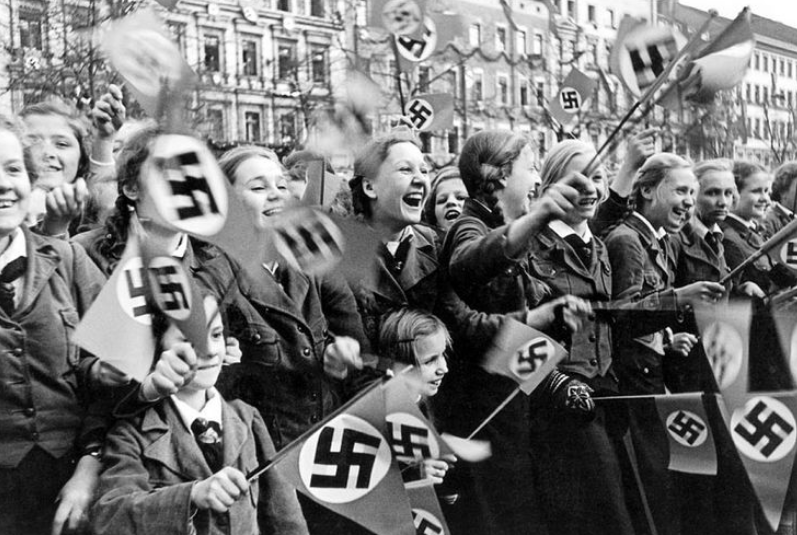
For much of the Nazi period, Hitler and the Nazis were very popular among Germans which was a real impediment to organised resistance.
Secondly, as highlighted above all political opposition to the Nazis from within Germany itself was ruthlessly crushed. From day one. Note the dates of death for the members of the Reichstag. 1933, 1934, 1935, and so on until 1945. Places of death include Flossenbürg, Mauthausen, Dachau, Bergen-Belsen.
Elser’s action dated from 1939 and they tortured him in Gestapo HQ relentlessly for two years after they captured him before they finally sent him to Dachau and then they maliciously shot him just before liberation on April 9, 1945. Elser represented the internal resistance from leftists which for some reason is glossed over by many historians. Probably most likely because of the association with communism and the fact so few survived. It is therefore unsurprising they are often left out of the resistance narrative post-war.
Thirdly, with the destruction or silencing of political opposition, either through brutality or the sheer force of success there was a lack of centralised consolidated resistance movement. The small number of people that did object drew from disparate sections of society and did not always share the same motivations, concerns or objectives.
Resistance was thoroughly atomised without a central force to organise around. There was some religious resistance to the Nazis, the Catholic Church in particular defied attempts to bring it under Nazi control. The Protestant churches took the policy of trying to find a way to work with the Nazis though individual clerics such as Dietrich Bonhoeffer were staunch critics of euthanasia and the emerging programme of genocide against the Jews. The youth resistance movement Weiße Rose (White Rose) were ideologically influenced by the writings of Catholic Bishop August von Galen. These early forms of resistance constituted the majority of those who objected to the Nazis for moral reasons.
By 1943 the last best hope for German resistance to the Nazis was the military and the intelligence community. At certain times during the Third Reich this was the only body with means to provide organised resistance. But there were serious issues with military resistance because as mentioned above, many of the men in the military shared the same imperialist ambitions and values as the Nazis. Military resistance to the Nazis was highly varied but generally broke down into people who were anti-Nazi and those who were anti-war. Even among those who resisted due to anti-war sentiments there were different opinions and motivations.
And remember how I said the when and how is very important? Many within the military who eventually resisted the Nazis started out supporting them, only changing their minds when it became clear Germany was losing the war. Being military men did not predispose them to rebellion. For many this was anathema to their very code of living. Only something drastic that might violate that same code (like Hitler issuing insane orders in the face of massive loss) forced them into action.
There were also huge differences of opinion about what methods should be employed, there were those who hoped that all they had to do was find a way to reason with Hitler. Only later did some develop more treasonous ideas that the only way out for Germany was to cut off the beast’s head i.e. assassinate Hitler.
So you see my quandary here with V‘s Fifth Column. The way the Visitors effortlessly neutralise objections on Earth indicates this is by now a well-oiled machine. They have been doing this for a while now, obviously beginning with the suppression of their own population. How long this has gone on for is anyone’s guess but I’m willing to use the Nazis as a yardstick, plus extrapolate from a couple of things Martin tells us, and say the Leader has been around for at least a decade.
To me this is why Martin and Barbara (and even Willie) are some of the most critical characters in V. This is because the show asks the question “how would you respond to a totalitarian takeover?” and I’m being a real pain and insisting on historiographically adding the question “and why?” This is most acute consideration for those from within this regime.
Ok, tour over, you can sit down now. Let’s take a look at our Fifth Columnists.
Barbara (played by Jenny Neuman)

Why is it always the female characters, even the alien ones, that end up putting their bodies on the line in the most visceral and intimate ways?
There are many heterosexual male viewers who are very disappointed not to see Barbara again after her memorable appearance in the original series. It’s a real shame that we did not see more of her. Rumours abound that she was originally written to be Mike’s eventual lover which would have been really interesting to see.
We actually know very little about Barbara at all. Apart from the fact she is willing to put her life on the line for the sake of a human. She has so few lines but what little she does say tells us so much!
Mike: Why are you doing this?
Barbara: Because it’s right!
V
Well you can’t get clearer than that. Barbara is motivated by a moral decision. This means she falls squarely in line with members of the German Resistance who objected on moral grounds.
It really doesn’t help that Barbara is an alien from a society that seems to have ingested all aspects of its society into some form of militarist force. Her role as a medic would lead me to search for resistance within the medical profession. Which there was! Just generally not among Germans (remember how simpatico many medical students were with the eugenics programme). The German clerics who protested again the Aktion T4 euthansia programme might be a good fit were it not for the fact Barbara is an alien whose religious beliefs we have no insight into.
The closest analogy I find is that of Sophie and Hans Scholl who were members of the Weiße Rose movement. Hans was the original founder of this resistance group. Hailing from Munich Hans and Sophie Scholl were well-to-do university students who had a strong intellectual and Christian upbringing. Hans was a medical student and Sophie studied biology and psychology. To the distress and consternation of their father, like most German youths of the 1930s they found the Nazis exciting and could not wait to join the ranks of the Hitler Jugend and Bund Deustcher Mädel respectively. But by the 1940s both began to become disgusted with the actions of their leaders. As noted above both were strongly influenced by the writings of Bishop August von Galen. Under the aegis of the Weiße Rose they distributed leaflets, reproducing the works of von Galen as well as expressing opinions of their own:
Since the conquest of Poland, 300,000 Jews have been murdered in this country in the most bestial way … The German people slumber on in dull, stupid sleep and encourage the fascist criminals. Each wants to be exonerated of guilt, each one continues on his way with the most placid, calm conscience. But he cannot be exonerated; he is guilty, guilty, guilty!
2nd pamphlet by Weiße Rose

Weiße Rose members (left to right) Hans Scholl, Sophie Scholl and Christoph Probst
Sophie and Hans Scholl were captured in 1943 and beheaded by guillotine. For handing out leaflets. Let me repeat for emphasis. For handing out leaflets.
The last we hear of Barbara, Martin tells us she is ” … recovering” in a way that is not in the least bit reassuring.
The life of a Fifth Columnist is almost inevitably going to be a short one. We don’t know what became of Barbara but it’s not likely to be good.
Martin (played by Frank Ashmore)

Mike Donovan: “I’m proud to have you as a friend”
Martin: “I hope we live to be old friends”
Yeah. Good luck with that mate.
In an overly self-critical moment during a panel at the 2017 ComiCon Frank Ashmore said he may have overplayed – not so much the fear – but more the “sense of urgency” in his character. Bit harsh.
As mentioned above Martin is a bit of a conundrum. Unlike Barbara he is squarely a member of the military. He never comes out and says it as directly as Barbara, but his actions show us this is someone who is motivated by moral concerns and has felt this way for a fairly long time.
I said that “when” is actually a very important factor for German military resistance and this applies directly to Martin. So let’s look more closely at when Martin is spurred into action. Unlike his German counterparts Martin feels he must act not when things are going badly for the Visitors, but instead when things are going really well.
At the time Mike is captured, it looks like Earth has collapsed in a heap and the Visitor’s conquest will be a forgone conclusion. This is not a man motivated by thoughts of losing a war or needing to save his own people from a mad leader dead set on dragging everyone with him into the jaws of hell. Furthermore his objections to Diana are clearly moral. He doesn’t need to utter so much as a word to this effect, he says this just with his face. See:
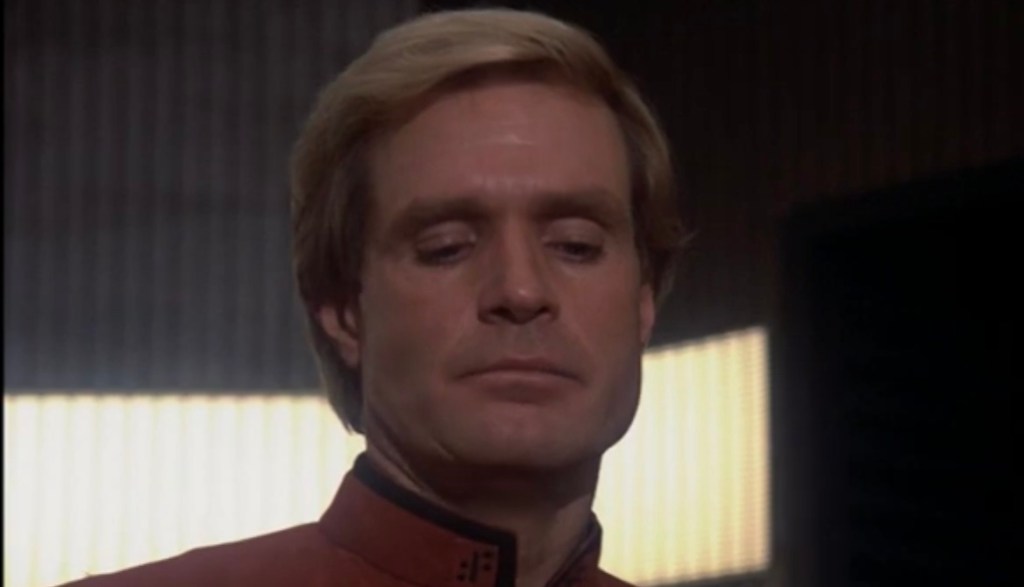
How much disgust can one actor pour into a micro expression?
The thing that I’ve often thought about with this character is the forced proximity Martin must face each day to someone he absolutely detests. I’ve already compared this to the way the inmate doctors at Auschwitz said they felt about Josef Mengele. But when you consider Martin’s nature, his beliefs and the fact that he has a front row seat every damn day to the torture and misery Diana inflicts upon other people you can begin to understand why he’s so keen to clamber on board that shuttle and escape with Donovan, Robin and Sancho. And why he’s so cavalier about his cover being blown when Donovan blurts out his name under the influence of truth serum.
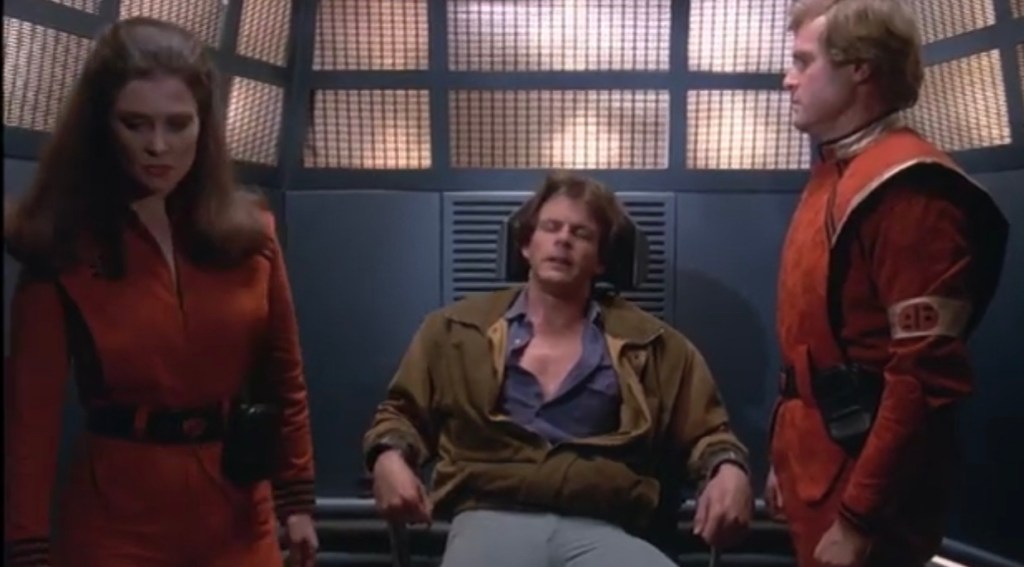
Every damn day
At heart this is an honourable and compassionate man not at all well suited to the position in life he finds himself in. It is this that makes him my favourite character of all. (Above even Ham Tyler or Juliet Parrish both of which are vying for second place.) I think Martin as a character is really quite extraordinary. I mentioned a book called Soldaten in an earlier post that highlights how German soldiers started out being appalled by the acts they were required to commit during the war but quickly became inured through psychological conditioning (and perhaps a strong need to preserve their sanity). This to me highlights just how incredible it is that Martin holds on to his principles and refuses to be numbed to the brutality of his daily life, even if it means extreme psychological discomfort for himself. There’s really no one quite like him.
Placing Martin historically has been even more of a process of elimination than any other character in V. So because I think the “who”, “when”, and “how” is so important I’ve provided some vital dates for each person discussed below: I think they say a lot. Let me take you through this now.
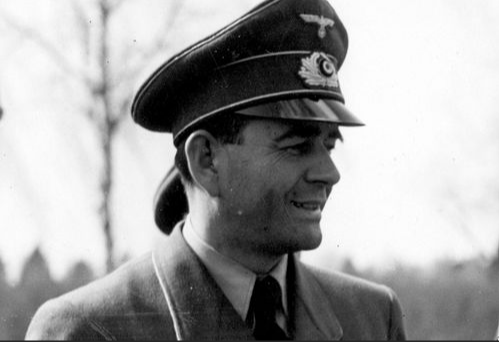
Martin is not Albert Speer
- Turning point: 1945
- Date of death: 1981
- Place of death: London
Albert Speer is a representative of that section of German society that claimed that they had “qualms” during the Third Reich and certainly by 1945 began to see the wrongs of the Nazi regime. After the war Albert Speer was held up as a tale of redemption. His contrition at the Nuremburg Trials and his willingness to share insights on the inner workings of the Nazi state boosted pubic opinion of him after the war. For many years he was seen as the “Good Nazi” and this perception was still prevalent when V was made.
But what resistance action did Speer materially take against Hitler? Very little. He claimed that he worked to preserve Germany’s state infrastructure during the last cataclysmic months of the war but his efforts are widely thought to be overstated. There was also the question of how aware Speer was of the genocidal activities of his government, which he claimed until the day he died that he was ignorant of. Gitta Sereny’s biography written off the back of a series of interviews with Speer all seem to hinge on the question of his presence at the Wannsee Conference. (Never has the balance of moral judgement hinged so much on how good a man is at honouring his written diary appointments.) It is now believed to be highly likely Speer was in attendance as his diary states and that he wilfully blocked out the memory of it.
Speer was a man who was broadly considered a bit of a slimy opportunist by his Nazi contemporaries at Nuremburg. Historians in the past twenty years are coming around to the fact they may have had a point.
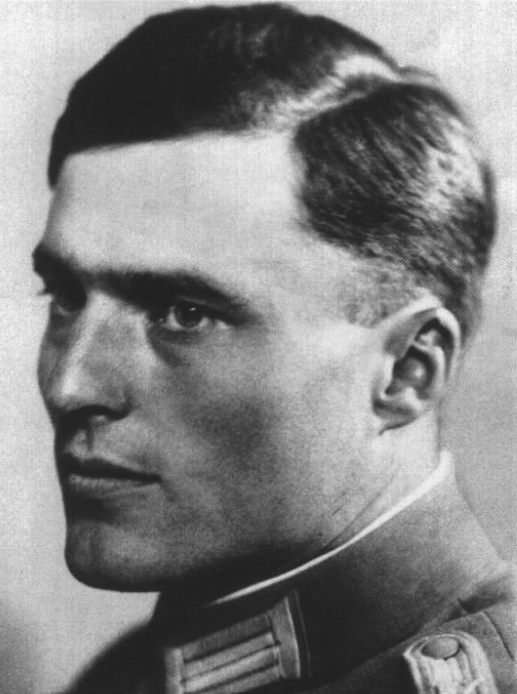
Martin is not Claus von Stauffenberg
- Turning point: 1943
- Date of death: 1944
- Place of death: Berlin
Von Stauffenberg is somewhat of a lionised figure of military resistance to the Nazis (I mean jeez check out that memorial to him on Stauffenbergstraße. I get that the Germans are all cool and phlegmatic about nudity but is that necessary?)
It does amuse me that an American actor of clearly German descent is playing the role of Martin and like Stauffenberg he embodies the Nazi ideal of Aryan manhood. While there is some physical resemblance, I don’t think Martin is Claus von Stauffenberg.
Von Stauffenberg was the ringleader in the famous July Plot to assassinate Hitler. Unfortunately due to Hitler’s love of heavy oak tables the plan failed. Von Stauffenberg and his co-conspirators were executed immediately in Bendlerblock where his statue now stands. The failure of the July Plot had disastrous consequences for all the different groups of German resistance. It had the effect of focusing attention on numerous dissident groups, some of who were involved in the plot and some who were not. This lead to so many such as Bonhoeffer (mentioned above) and Canaris and Oster (more below) being sent to concentration camps. For any form of German resistance it was a devastating blow.
Von Stauffenberg’s military position makes him a better candidate as inspiration for Martin than Speer who was the Minister for Armaments and War Production. His actions were the most direct attempt to resist Hitler, unlike Speer who had nothing material to point to.
I have however discounted von Stauffenberg because orginally he was a strong supporter of Hitler and his sentiments only arose once he realised Germany was going to lose the war. It’s also debatable just how much he was motivated by feelings about the Jewish genocide. This is not to say his actions were not heroic and there isn’t redemption in a change of heart. It’s just a little late in the game. (Even if it eventuates Johnson had von Stauffenberg in mind when he wrote Martin, I stand by my claim that historically it’s not a close enough analogy.)
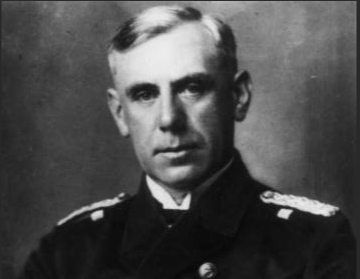
Martin is not Wilhelm Canaris
- Turning point: 1938
- Date of death: 1945
- Place of death: Flossenbürg
We are getting closer now. Canaris was again someone who had originally shared some sympathies with the Nazis but gravitated more and more toward the anti-Nazi camp as the atrocities racked up. He had been involved in various low grade acts of non-compliance shall we say during the 1930s but things galvanised when he was sickened by the things he saw during the invasion of Poland. Reports of the destruction of the Polish people and the actions of the Einsatzgruppen were said to have brought him to tears.
Canaris had a potted history within the Reich, he somehow survived previous purges of the military and found himself in charge of the Abwehr (German Intelligence Service). It is thought Canaris was one of those “least offensive” appointments. You know the type, there’s a job going in a workplace with bitter factionalism and the best thing to do is appoint someone neutral. Canaris somehow managed to, well not get on with, but not cross swords with Reinhard Heydrich, the guy I said was likely the basis for Steven. Since I always imagined that was the nature of the relationship between Martin and Steven, it seems a fairly apt comparison.
Canaris was able to conceal his activities for many years under the guise of “intelligence” and he had connections with the Allies. The Abwehr was pretty rubbish for Germany truth be told, and maybe the fact SOE turned most of their agents might be why. The thing that makes me discount Canaris more than anything is his rank as Admiral, his perceived age (he was referred to by Heydrich as a silver fox), and his less than upstanding sexual morality (because Heydrich was right, he really was a silver fox). But this one is really close, the flak from the ground is getting very heavy here, I can tell you.

Hans Oster
- Turning point: 1934
- Date of death: 1945
- Place of death: Flossenbürg
Achtung! Achtung! Ding ding ding!
Hans Oster was a Lieutenant-Colonel in the Abwehr who initially supported Hitler but changed his mind quickly after the bloodshed of the Night of the Long Knives. But it was the November Pograms (Kristellnacht) that pushed Oster to develop a deep hatred for the Nazi regime and resolve to take action.
Oster was the leader for the Oster Conspiracy which was a plot to kill Hitler should he have gone ahead with his threats to take Czechoslovakia by force. Oster recruited a number of others in this plot, including Canaris. The plan was to storm Hitler’s offices and kill him after the invasion of Czechoslovakia was announced. The rest of the Nazi party was to then be dismantled and a new leader installed. The plan went tits up though because of Neville Chamberlain and his “peace in our time” negotiation with Hitler. The peace accord completely demoralised the conspirators who had to abandon their plan.
Oster was able to continue to function in the Abwehr undetected, where he provided intelligence, helped connect resistance groups, oversaw the provision of safe passage to escaping Jews and provided vital cover-ups of conspiratorial activities as “intelligence operations”.
I think Oster fits the bill nicely because of his rank, and the resulting activities he took responsibility for. But also because of his moral objections to the Nazis, and the longevity of his career.
You will note that he and Canaris (And Bonhoeffer for that matter) share the same death date. In fact they shared the same fate as Georg Elser had on the same day in Dachau. Canaris, Oster and Bonhoeffer were among German Resistance members who were lined up, stripped naked and shot just weeks before Flossenbürg was liberated by the Americans.
So all things considered. No. I don’t think Frank Ashmore overplayed the sense of urgency any of these men would have felt. In fact A+. He understood the historical context perfectly. What’s most impressive is he knew all that through actor’s craft and instinct. Kind of puts all the effort I made in archives and libraries to gain this knowledge to shame. It really is an outstanding and humane (yes, yes I know) performance. Bravo.
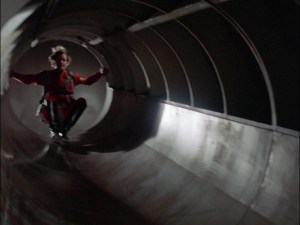
Time to go! A gleeful looking Martin leaves the building SOE style in The Final Battle
This has been extremely enjoyable writing this series over the past few months. It started out as one post and then grew into a monstrous Hydra as it got more attention than I expected and I found I had more and more to say. I really do hope you enjoyed reading this and that I at least gave you something to think about. Thank you all for coming along on this journey.
As stated at the beginning I am very sorry I could not write about every conceivable character, there are so many and some of my own favourites not covered: Ruby, Tony, Willie, Harmony, Caleb to name a few. What remains to be said is this:
To the heroism of the Resistance Fighters — past, present, and future — this work has been respectfully dedicated.
 When Martin Died